
Can You Paint Over Exterior Stained Wood? Yes, and How to Make It Last
Can you paint over exterior stained wood? Yes, and homeowners ask us this constantly about weathered fences, fading decks, tired wood siding, pergolas, and shutters they would rather refresh than replace. The honest answer is that painting over exterior stain works well on most surfaces, but exterior wood lives a harder life than interior trim. Sun, temperature swings, moisture, and foot traffic all attack the paint film, so prep and product selection matter more outdoors than anywhere inside the house.
This guide is specific to exterior surfaces. It covers how to tell what stain you are dealing with, how the approach changes for fences versus siding versus decks, why decks are a special case, the exact prep steps, and how the desert climate in Las Vegas, Reno, and Southern Utah shapes the whole job. For the full interior-and-exterior fundamentals of painting over stain, our complete guide to painting over stained wood is the companion piece to this one.
First, Identify the Stain and the Surface
Two things drive every decision: what kind of stain is on the wood, and what surface it is on.
Oil-based versus water-based stain. Oil-based stains soak deep into the grain and carry resins and tannins that bleed up through fresh paint if you do not seal them first. Water-based stains are more forgiving but still benefit from a primer, especially on tannin-heavy woods like cedar and redwood. To test an unknown stain, wipe a hidden spot with a rag dampened in denatured alcohol: if color lifts, it is water-based; if nothing transfers, treat it as oil-based and prime accordingly. When in doubt, prime as if it is oil-based. The cost of an extra primer coat is trivial next to stripping a failed paint job off a full fence line.
The surface changes the rules. A vertical fence or wall sheds water and never gets walked on, so it holds paint well. A horizontal deck collects standing water, bakes in direct sun, and takes foot traffic, which is why decks fail faster than any other painted exterior wood. We will take these one at a time.
Painting Over a Stained Fence
Fences are the friendliest exterior surface for going from stain to paint. They are vertical, so water runs off, and nobody walks on them. To paint over a stained fence that will last: wash it to remove dirt, chalk, and mildew; let it dry fully; sand off any loose or flaking stain and dull the surface so primer can grip; spot-prime or fully prime with a stain-blocking exterior primer; then apply two coats of 100% acrylic exterior paint. The biggest fence mistakes are painting over a damp fence after washing and skipping the primer over an old oil-based stain, both of which lead to peeling within a season. Cedar and redwood fences in particular need a stain-blocking primer because their natural tannins will bleed through paint that goes on bare.
Painting Over Stained Wood Siding
Wood siding (board-and-batten, lap siding, T1-11, shakes) takes paint beautifully and painting it is often the single biggest curb-appeal upgrade a home can get. The process mirrors the fence: thorough cleaning, full drying, sanding to remove failing finish and dull the surface, a quality exterior primer (stain-blocking over oil stain or tannin-rich wood), and two coats of 100% acrylic exterior topcoat. Siding has higher stakes than a fence because failures are obvious from the street and water intrusion behind siding can damage the structure, so any cracked boards, failed caulk at seams, or rot should be repaired before painting. If your siding is sun-faded and the question is really whether to repaint at all, our guide on whether it is time for home exterior repair walks through the warning signs.
Painting Over a Stained Deck: The Special Case
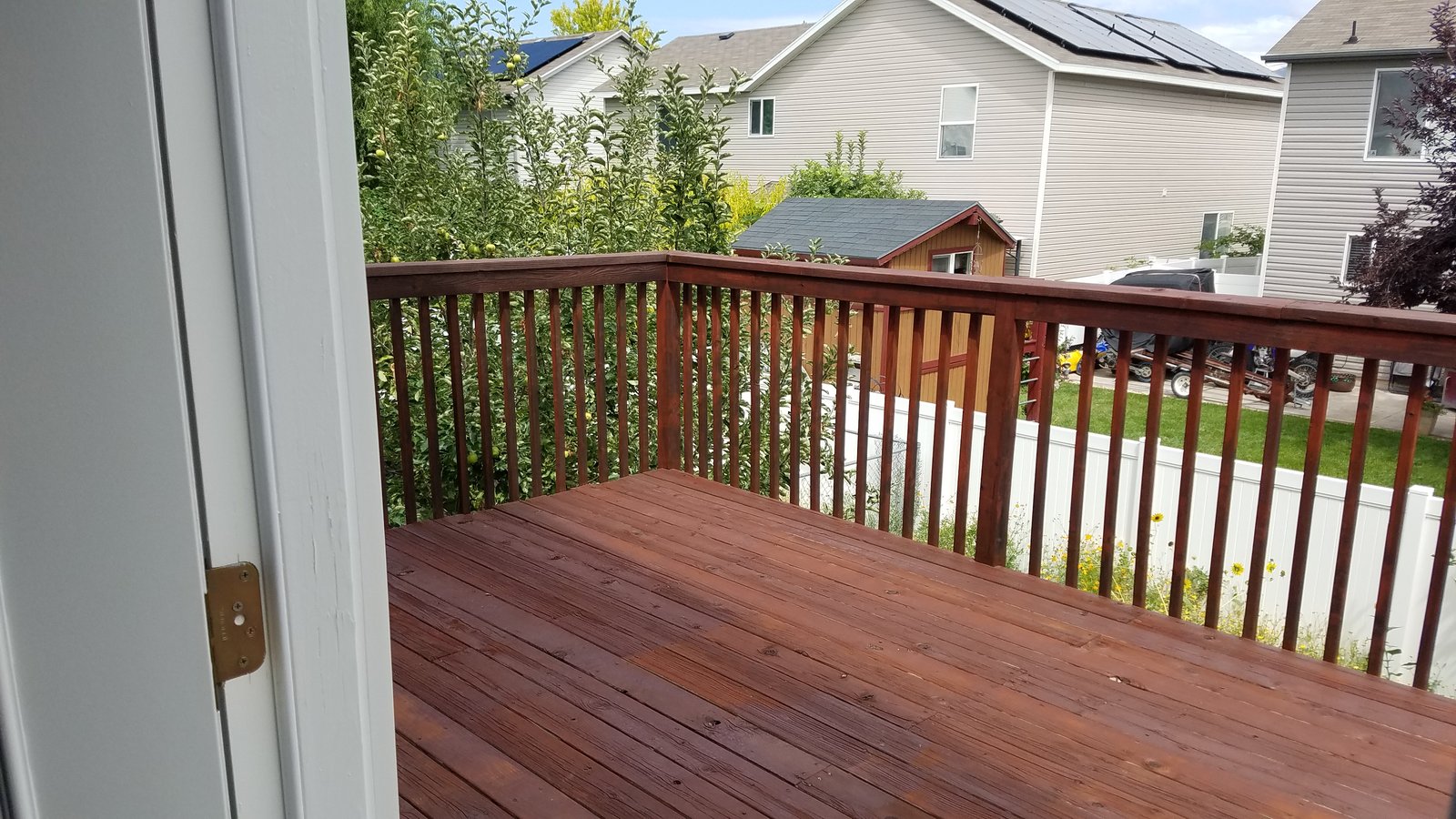
Decks are where the "can you paint over exterior stain" question gets complicated, and where we steer homeowners carefully. You absolutely can paint a stained deck, and a painted deck looks crisp and uniform. But a deck is the worst-case surface for paint: it lies flat so water pools instead of running off, it bakes in full overhead sun all day, and people walk, drag chairs, and set planters on it. Paint sits on top of the wood as a film, and any film on a horizontal, high-traffic, sun-blasted surface is under constant attack. When a painted deck fails, it does not fade gracefully like stain; it peels and flakes, and stripping peeling paint off a deck is a miserable, expensive job.
Because of that, the better long-term answer for many decks is a deck-rated stain or a dedicated solid-color deck coating rather than standard exterior paint. A solid-color deck stain gives you nearly the look of paint (full color, hiding the grain) while penetrating and wearing far better underfoot. If you do paint a deck, use a product specifically rated for deck and floor use, prep it meticulously, and know going in that the deck surface (the part you walk on) will need recoating sooner than the railings and vertical trim. The vertical parts of a deck (railings, balusters, fascia) behave like a fence and take regular exterior paint fine; it is the walking surface that wants a deck-specific product.
Want a professional to handle the exterior?
AllPro Painters has completed 10,000+ projects across Las Vegas, Reno, and Southern Utah. We assess the wood, recommend paint or stain for the surface, and back the work with a written warranty.
Get a Free Exterior Painting Estimate →Step-by-Step: Painting Over Exterior Stained Wood
Step 1: Clean Thoroughly
Exterior wood collects dirt, mildew, pollen, and a layer of oxidized old finish, and paint will not bond to any of it. Wash the surface with a wood cleaner or a TSP solution to cut grease, mildew, and chalk. Pressure washing is efficient on fences, siding, and decks, but keep it to a moderate setting for wood (roughly 600 to 1,200 PSI) so you do not gouge the grain or shred softer species like cedar. Let the wood dry completely before going further.
Step 2: Let It Dry, Then Test Moisture
Painting over damp exterior wood is the number one cause of peeling, and it is completely avoidable. In the dry heat of Las Vegas, Henderson, and Southern Utah, washed wood typically dries in 24 to 48 hours. In Reno and Northern Nevada, allow 48 to 72 hours in cooler or damper weather. A moisture meter takes the guesswork out; aim for wood that reads at or below the mid-teens percent before you prime.
Step 3: Sand and Scrape
Remove all loose, peeling, or flaking stain down to a stable surface, then sand to dull the existing finish so primer can mechanically grip. Start around 80 grit on rough or heavily weathered exterior wood and finish around 120. Brush or blow off all dust before priming. Painting over a failing layer of old stain just carries that failure up into your new paint.
Step 4: Prime With the Right Exterior Primer
Over oil-based stain or tannin-rich wood (cedar, redwood, knotty pine), use a stain-blocking exterior primer, shellac-based or a quality oil or acrylic stain-blocker, to lock in tannins and stop bleed-through. Over a clean water-based stain on a stable surface, a high-quality 100% acrylic exterior primer is usually enough. In the desert, choose a primer formulated for exterior use with UV resistance, because the sun degrades everything you put over it faster than national product charts assume.
Step 5: Two Coats of 100% Acrylic Exterior Paint
Finish with two coats of 100% acrylic exterior paint. One coat never gives enough hide or film thickness, especially going from a dark stain to a lighter color. We use Sherwin-Williams and Dunn-Edwards exterior products because both are engineered for high-UV, high-heat conditions. 100% acrylic stays flexible as temperatures swing, which is essential on wood, the building material that expands and contracts the most. A brittle film on exterior wood in the desert will crack and peel within a season or two.
Desert Climate Changes the Game
Exterior stained wood in Las Vegas, Reno, Henderson, Summerlin, St. George, and Mesquite faces conditions most paint guides ignore:
- Extreme UV. High-elevation desert sun breaks down paint film faster than coastal or northern climates, so UV-resistant exterior products and a UV-rated primer are not optional here.
- Big temperature swings. Summer highs above 110 degrees and freezing winter nights mean wood, and the paint on it, expands and contracts across a huge range. 100% acrylic flexes with it; cheaper coatings crack.
- Low humidity and fast dry times. Desert air makes paint skin over fast, which causes lap marks on large surfaces like fences and siding. Work in the morning, start in the shade, and keep a wet edge.
- Surface heat. South- and west-facing wood can exceed 150 degrees by early afternoon in summer. Paint applied to a scorching surface dries too fast and adheres poorly. Paint in the cooler morning hours.
When to Call a Professional
Painting over exterior stained wood is a reasonable DIY project for a small, accessible surface, a single gate, a section of fence, ground-floor shutters. It is worth hiring a professional when you are dealing with a full fence line or whole-home siding, two-story or hard-to-reach surfaces, a deck where the paint-versus-stain decision and prep really matter, wood with unknown stain or heavy weathering, or any time you want a warranty-backed result. A professional exterior job should come with a written labor warranty.
AllPro Painters handles exterior wood repaints, including stained-to-painted transitions on fences, siding, decks, and trim, across Las Vegas, Henderson, Summerlin, North Las Vegas, Reno, Sparks, Carson City, and Southern Utah. Our exterior painting services include full prep, cleaning, sanding, priming, and two coats of professional-grade topcoat using Sherwin-Williams or Dunn-Edwards products, with a written estimate and a written warranty on every project. If you are leaning toward keeping a natural wood look instead of paint, our cabin staining tips cover the stain side. Call 702-550-4755 for a free estimate.
Exterior Stained Wood: Quick Answers
Can you paint over exterior stain without sanding?
You can, but you should not skip it on exterior wood. Sanding removes loose finish and dulls the surface so primer and paint grip. On weathered or glossy exterior stain, skipping sanding sharply increases the odds of peeling under desert sun and temperature swings.
Is it better to paint or stain an exterior deck?
For the walking surface of a deck, a deck-rated stain or solid-color deck coating usually outlasts paint because paint forms a film that peels under foot traffic, standing water, and direct sun. Railings and vertical deck parts take regular exterior paint fine.
What primer should I use over exterior stained wood?
Use a stain-blocking exterior primer over oil-based stain or tannin-rich woods like cedar and redwood to prevent bleed-through. Over a clean water-based stain, a quality 100% acrylic exterior primer is usually sufficient. In the desert, choose a UV-rated exterior primer.