Can You Paint Over Stained Wood? The Complete Guide
Painting over stained wood is one of the most common questions we get from homeowners who want to refresh an exterior fence, deck, trim, shutters, or interior woodwork without replacing it. The short answer is yes — you can paint over stained wood. But the prep process is what separates a job that holds up for a decade from one that starts peeling by next spring.
This guide covers everything you need to know: how to identify which type of stain you're working with, the full step-by-step prep process, which primer to use, and when the project is DIY-friendly versus when it's smarter to call a professional painting contractor.
First: What Type of Stain Is on the Wood?
Not all wood stains behave the same way under paint. The single most important variable before you buy a can of primer is whether the existing stain is oil-based or water-based. Getting this wrong leads to one of the most frustrating paint failures: tannin bleed-through, where brown or yellow staining from the old finish bleeds up through fresh paint within days.
Oil-Based Stains
Oil-based stains penetrate deeply into the wood grain and contain resins that can bleed through water-based paint if not properly sealed first. If you apply latex paint directly over an oil-based stain without priming, tannin compounds from the wood and stain migrate through the wet paint film and cause discoloration. The older the stain and the more weathered the surface, the worse the bleed-through tends to be. Cedar, redwood, and pine are especially prone to this because they're naturally high in tannins.
Water-Based (Latex) Stains
Water-based stains are more forgiving. They don't penetrate as deeply, and they're chemically more compatible with latex topcoats. That said, if the stain is dark, if the wood species is tannin-heavy, or if you're doing a light paint color over a dark stain, you should still apply a primer before topcoating. The 10 minutes of primer application is cheap insurance against a bleed-through problem.
How to Tell Which Type You Have
If you don't have the original can, use this field test: wipe a small section of the stained surface with a rag dampened in denatured alcohol. If color transfers to the rag, the stain is water-based. If nothing comes off, it's oil-based. When in doubt, treat it as oil-based — the cost of applying an extra primer is trivial compared to the cost of stripping and repainting a failed job.
Step-by-Step: How to Paint Over Stained Wood
Step 1: Clean the Surface Thoroughly
Paint bonds to clean, stable surfaces. Dirt, mildew, oxidized finish, and surface contaminants all create adhesion failures waiting to happen. Before anything else, wash the surface with a TSP (trisodium phosphate) solution or a dedicated wood cleaner to remove dirt, mildew, and chalking. For exterior surfaces — fences, decks, siding, shutters, exterior trim — pressure washing is efficient and thorough, but use a moderate pressure setting (600–1,200 PSI for wood) to avoid raising the grain or damaging softer species like cedar.
Let the wood dry completely before priming. In the desert climates of Las Vegas, Henderson, and Southern Utah, wood dries fast — typically 24 to 48 hours after washing in dry weather. In Reno and Northern Nevada, plan for 48 to 72 hours if the weather is cool or humid. Painting over damp wood is one of the most common causes of adhesion failure and peeling, and it's entirely preventable.
Step 2: Sand the Surface
Sanding accomplishes two things: it removes rough patches, raised grain, and any loose or flaking stain; and it scuffs the existing surface so primer has something to mechanically grip. For smooth surfaces like interior trim, use 120–150 grit. For rougher exterior wood or surfaces with old paint buildup, start at 80 grit and finish with 120. Wipe away all sanding dust with a tack cloth or clean damp rag and let the surface dry before priming.
If the existing stain is visibly peeling or flaking, remove all loose material down to a stable base before sanding. Painting over peeling stain just transfers the failure layer into your paint job — the new paint will follow the old stain off the surface.
Step 3: Apply the Right Primer
Primer is the step most DIYers skip. It's also the step that determines whether a paint job lasts two years or ten. The primer you need depends on what you're working with:
- Over oil-based stain: Use a shellac-based primer or an oil-based primer. Shellac-based primers (such as Zinsser BIN) create a hard barrier that locks in tannins and prevents bleed-through. They dry quickly, sand well, and are compatible with latex topcoats. Oil-based primers are slower to dry but also provide excellent stain-blocking for challenging surfaces.
- Over water-based stain: A high-quality 100% acrylic latex primer works in most cases. For tannin-heavy woods like cedar, redwood, or knotty pine, step up to a dedicated stain-blocking primer even if the stain is water-based.
- For exterior wood in desert climates: Use a primer formulated for exterior use with UV inhibitors. The sustained heat and UV radiation in Las Vegas, Summerlin, Henderson, and Southern Utah degrades paint film faster than in moderate climates — starting with a primer that's engineered for these conditions extends the life of everything you apply on top of it.
Apply primer in a thin, even coat and let it dry to the manufacturer's specified cure time before topcoating. In the desert heat, surface temperatures can cause primers to skin over faster than expected. Work in the morning if possible, or use a slow-cure additive compatible with your primer if you're doing large surfaces in direct afternoon sun.
Step 4: Apply Two Coats of Topcoat
Two coats of topcoat is the professional standard, and for good reason. One coat rarely provides adequate hiding power, especially when going from a dark stain to a lighter paint color. It also leaves you with reduced film thickness and less UV protection — which matters more in the Southwest than almost anywhere else in the country.
For exterior stained wood in Las Vegas, Reno, and Southern Utah, we recommend 100% acrylic exterior paint from Sherwin-Williams or Dunn-Edwards. Both brands produce exterior formulations engineered specifically for high-UV, high-heat environments. 100% acrylic paint stays flexible as temperatures cycle between cold winter nights and 115°F summer afternoons — which matters for wood, because wood expands and contracts with temperature more than any other common building material. A brittle paint film on a wood surface in the desert will crack and peel within one to two seasons.
Want a professional to handle it?
AllPro Painters has completed 10,000+ projects across Las Vegas, Reno, and Southern Utah. We assess the surface, recommend the right prep and product, and back the work with a written warranty.
Get a Free Exterior Painting Estimate →Common Mistakes When Painting Over Stained Wood
- Skipping the primer. If there's one takeaway from this entire guide, this is it. Applying paint directly over stain — especially oil-based stain — without a proper primer barrier is the most common cause of premature paint failure on wood. Don't skip this step.
- Painting over wet or damp wood. Even in a dry desert climate, wood holds moisture after rain or pressure washing longer than it looks. Use a moisture meter if you have one, or wait the full recommended drying window. Moisture trapped under the paint film causes blistering, peeling, and adhesion failure.
- Using interior paint on exterior surfaces. Interior and exterior paints are formulated differently. Interior paints lack the UV stabilizers, moisture resistance, and flexibility additives that exterior formulations include. Using interior paint on an exterior surface dramatically reduces its service life — especially in the desert.
- One coat and done. One coat of topcoat on stained wood is not enough coverage or protection. Plan for two coats from the start and build it into your time and material budget.
- Not addressing damaged wood before painting. If the wood has rot, deep cracking, or structural issues, painting over it hides the problem without fixing it. Repair or replace damaged sections first — rotted wood cannot hold paint regardless of how good the primer or topcoat is.
- Painting in the heat of the day. On Las Vegas summer days, surface temperatures on south- and west-facing wood can exceed 150°F by early afternoon. Paint applied to an extremely hot surface dries too fast, leaving lap marks, brush drag, and poor adhesion. Paint in the early morning when surface temps are manageable.
Desert Climate Considerations
Painting stained wood in Las Vegas, Reno, Henderson, Summerlin, St. George, or Mesquite involves climate-specific variables worth accounting for before you start:
Extreme UV Degrades Paint Film Faster
UV radiation at desert elevation, combined with sustained heat, breaks down paint film faster than in coastal or northern climates. This means product selection matters more here than it does elsewhere — choose exterior paint with a high UV resistance rating, and expect that repainting cycles will be shorter than what national product charts suggest (those test conditions are usually based on more moderate climates).
Low Humidity Affects Dry Times and Application
Desert air means paint dries fast — sometimes faster than you'd prefer. On large surfaces, this makes it harder to maintain a wet edge and can cause lap marks where sections of wet paint overlap dried sections. Working in sections, starting in shade, and using a slow-dry conditioner compatible with your product can help manage this on hot, low-humidity days.
Temperature Swings Stress Painted Wood
Las Vegas sees summer highs above 110°F and winter nights that drop below freezing. That's a 130°F+ annual temperature swing on the same surface. Wood expands and contracts significantly over that range, and paint that can't flex with it will crack. This is the primary reason we specify 100% acrylic products for exterior wood in the Southwest — acrylic paint films remain flexible across a much wider temperature range than alkyd or lower-quality latex formulations.
When to Call a Professional Painter
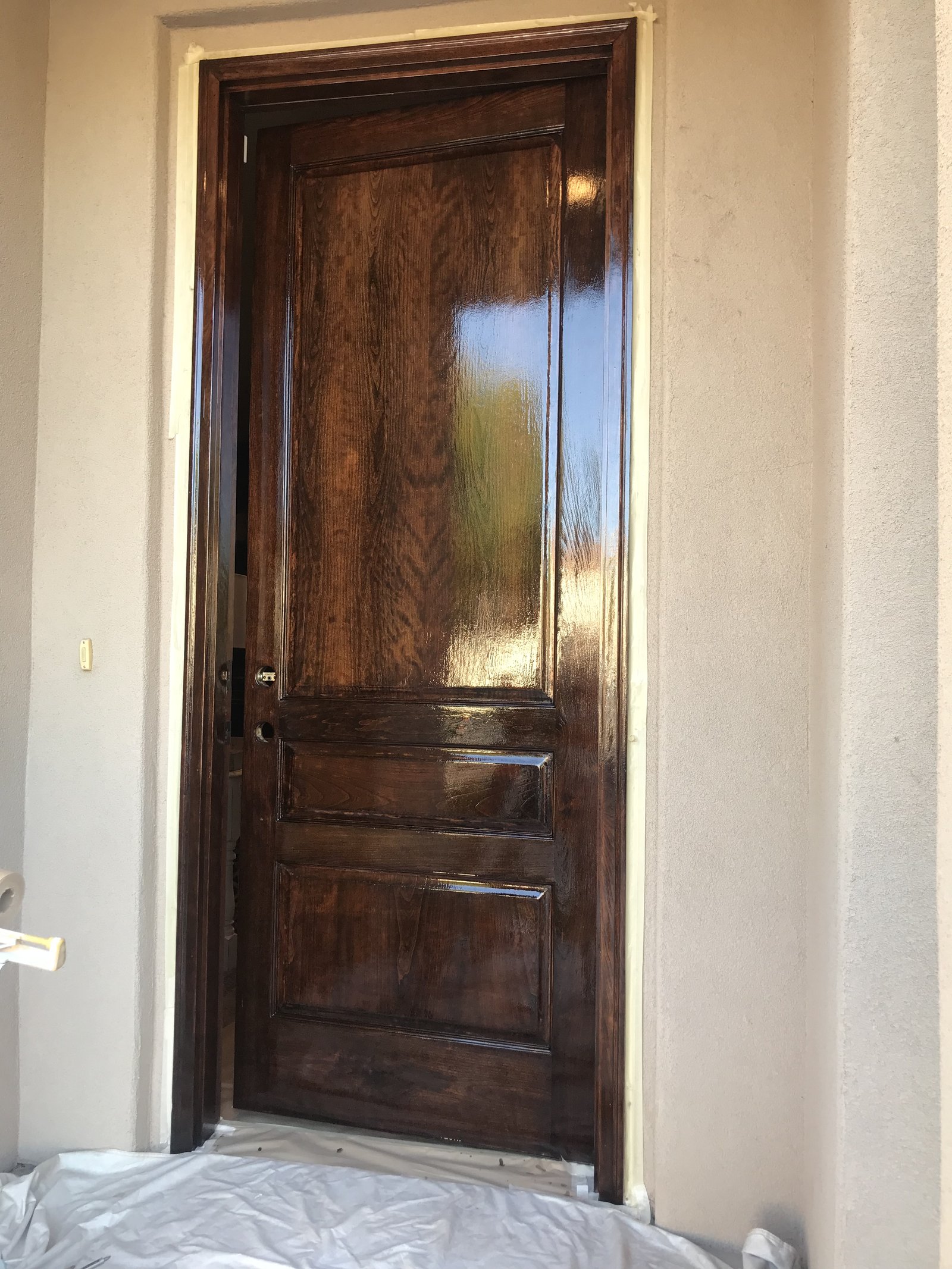
Painting over stained wood is manageable as a DIY project for small, accessible surfaces — a single door, a garden gate, window trim on the ground floor. But there are situations where hiring a professional is the better call:
- Large exterior surfaces — full fence lines, full deck surfaces, all exterior trim on a home
- Two-story or hard-to-access surfaces that require ladders or scaffolding at height
- Surfaces where the stain type is unknown and the risk of bleed-through is high
- Wood with uneven stain absorption, heavy weathering, or concealed moisture issues
- When you want a warranty-backed result — a professional exterior paint job should come with a written labor warranty
AllPro Painters handles exterior wood repaints — including stained-to-painted transitions — throughout Las Vegas, Henderson, Summerlin, North Las Vegas, Reno, Sparks, Carson City, and Southern Utah. Our exterior painting services include full prep: cleaning, sanding, priming, and two coats of professional-grade topcoat using Sherwin-Williams or Dunn-Edwards products. Every project comes with a written estimate and a written warranty on our labor.