How to Vet a Commercial Painting Contractor in Nevada: License, Bond and Insurance
Don't take "licensed, bonded and insured" on a truck door as proof of anything. Look the license up yourself with the Nevada State Contractors Board or Utah DOPL, confirm the classification covers painting and the monetary limit covers your contract value, and get a certificate of insurance that names your organization and that you've verified with the agent who issued it. Keep all of it on file before the first lift arrives.
Hiring a commercial painting contractor in Nevada or Southern Utah puts more at stake than a residential job ever does. You're signing on behalf of an organization, the work happens around employees, tenants, students or the public, and the contract value can be many times what a homeowner spends. The phrase "licensed, bonded and insured" shows up on nearly every proposal, but it's a claim, not a document. This guide walks through how to actually verify each of those three things, what a license number tells you that the brochure won't, and the paperwork a facilities or property manager should have in a folder before anyone opens a can of paint.
If you're painting your own home rather than a building you manage, the checks are simpler and the stakes are different. Our guide on how to choose a house painter in Las Vegas covers the residential side. Everything below is written for the commercial buyer.
Why commercial verification is a different job than residential
On a house, a license lookup mostly confirms the contractor is real and in good standing. On a commercial project, three extra things come into play:
- Contract size. Every Nevada contractor license carries a monetary limit (the maximum value of a single contract that contractor is allowed to take on). A residential repaint rarely gets near it. A multi-building apartment community, a school gymnasium or a retail center can exceed a smaller contractor's limit easily, and that's a problem for you, not just for them.
- Who's exposed if something goes wrong. On a house, an uninsured crew member's injury is a dispute between a homeowner and a contractor. On your property, with your employees, tenants and customers nearby, the exposure can land on the building owner, the management company or the board.
- Who has to answer for the paperwork later. Lenders, insurers, auditors and boards ask facilities managers to produce contractor documentation, sometimes years after the project. A homeowner never has to.
So the goal isn't just "is this contractor legitimate." It's "is this contractor licensed for this size of job, insured for this kind of risk, and can I prove it later."
What a contractor license number actually tells you
Ask every bidder for their license number in writing before you do anything else. A contractor who hesitates or says "it's on the truck" has already told you something. Then look it up yourself using the Nevada State Contractors Board's free online search at app.nvcontractorsboard.com. You can search by number, business name or the name of the qualifying individual. Don't rely on a screenshot the contractor sends you; pull the record yourself so you know it's current.
The record shows several things. Here's what each one means in plain terms and why it matters on a commercial job:
Status
Active is the only answer you want. Inactive, suspended, expired or revoked all mean the contractor shouldn't be bidding your work, regardless of how good the proposal looks.
Classification
A classification is the category of work the license covers. In Nevada, painting work falls under Classification C-4, Painting and Decorating, set out in NAC 624.220. The painting subclassification, C-4a, covers the application of paints, varnishes, protective coatings, shellacs and stains by brush, spray or roller. A contractor licensed in a different trade isn't licensed to paint your building just because they have "a Nevada license." Confirm the classification on the record matches the work you're buying, and if anything about it is unclear, ask the Board directly. Classification details change from time to time, so the Board's own answer beats anything you read online, including this article.
Monetary limit (the bid limit)
This is the one that commercial buyers most often skip, and it's the one that matters most. The monetary limit is the largest single contract the Board has approved that contractor to perform. It's set based on the contractor's financial standing and experience. If your project's contract value is above the limit, the contractor isn't permitted to take the job as licensed. That can expose both parties, and it tells you the Board hasn't vetted them to handle work at your scale. Compare the limit to your total contract value, including change orders you can reasonably foresee, and get the Board to confirm the current figure if there's any doubt.
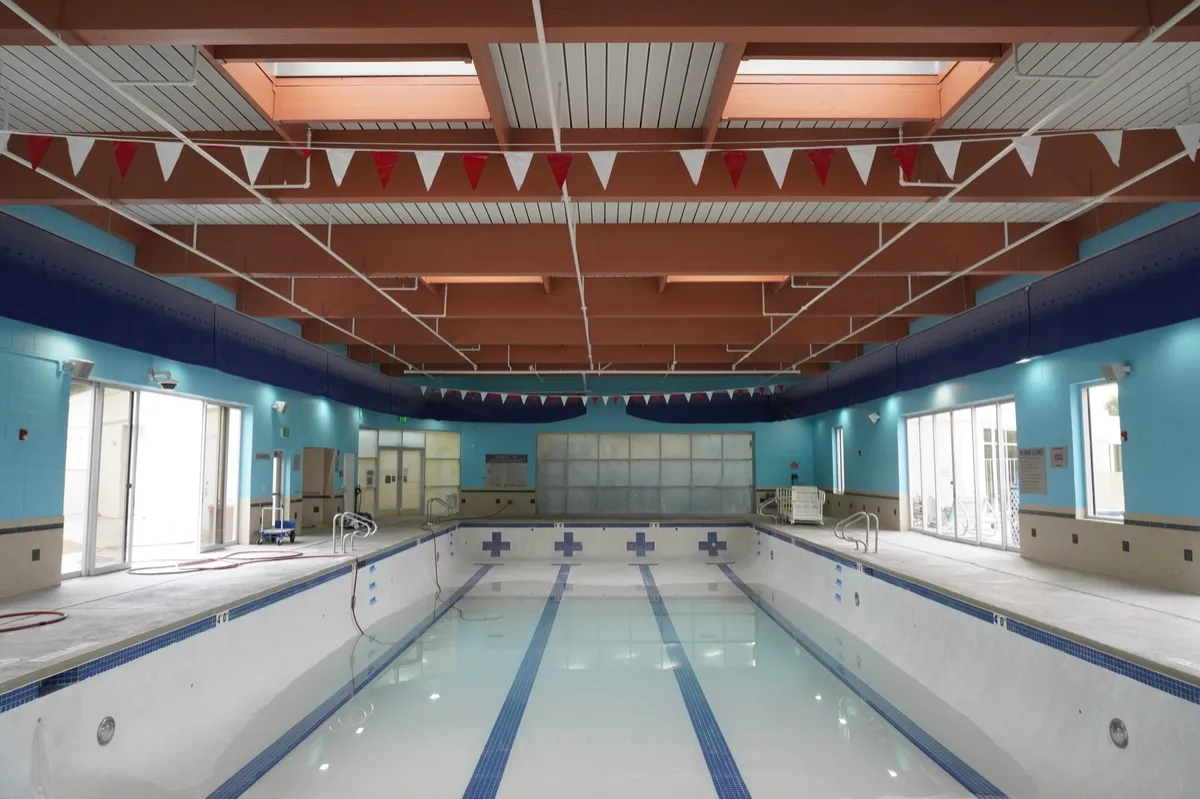
For reference, AllPro holds Nevada commercial license #76639 with a $9M monetary limit, which is why we can take on projects like school gymnasiums, a municipal aquatic center and multi-building apartment communities as the licensed contractor of record.
Bond and disciplinary history
The lookup also shows whether the license bond is in place and whether the Board has taken disciplinary action. A clean history over many years is a good sign. One complaint isn't automatically disqualifying, but a pattern is, and so is any gap in bonding.
Checking a license in Southern Utah with DOPL
Utah licenses contractors through the Division of Professional Licensing (DOPL), part of the Department of Commerce. The free license lookup is on the DOPL website at dopl.utah.gov, and you can search by license number or business name. Confirm the license is active, that the classification covers painting, and that there are no disciplinary actions on record. Utah's license categories and requirements differ from Nevada's, so don't assume a Nevada record answers a Utah question or the other way around. If a contractor serves both states, as AllPro does, verify each license separately. Our Utah license is #10696814-5501.
One practical point for projects near the state line: the license that matters is the one for the state where the building sits, not where the contractor's office is.
Want to see how a verified commercial contractor runs a project? AllPro has been licensed, bonded and insured since 2008, with 10,000+ projects completed across the Las Vegas Valley, Reno and Southern Utah.
Explore our commercial painting servicesBonded is not the same as insured
These two words get said together so often that many buyers treat them as one thing. They protect different people against different problems.
A license bond is a financial guarantee the contractor posts as a condition of holding a license. If the contractor violates licensing law or fails to complete work as required, a claim can be made against the bond, up to the bond's amount. It exists mainly to protect the people the contractor works for. Two things to understand: the bond amount is set by the state, not by the size of your project, so it's often far smaller than a commercial contract; and it isn't a warranty on the quality of the paint job. Confirm the bond is active through the license lookup, and ask the Board for the current required amount rather than relying on a figure from a proposal.
Insurance is what covers the actual risks of the work: someone getting hurt, property getting damaged, a worker injured on your roof. A bond doesn't do any of that. A contractor who's bonded but underinsured has met the licensing requirement and left you exposed on everything else.
Some contractors also offer a performance bond on larger jobs. That's a separate instrument, purchased per project, guaranteeing the work gets finished. If your board or lender requires one, it needs to be requested and priced specifically; it doesn't come with the license bond.
The two insurance policies you can't skip, and who pays if they're missing
A commercial painting contractor should carry at least two types of coverage. Ask about both by name.
General liability
General liability covers bodily injury and property damage to third parties caused by the contractor's operations. On a painting job that means things like overspray on tenant vehicles, a ladder through a storefront window, a customer slipping on a drop cloth, or damage to a neighbouring building. If the contractor doesn't carry it, the injured party or the damaged owner looks for the next responsible party, and on your property that's often you.
Workers' compensation
Workers' compensation covers the contractor's own employees if they're injured on the job. Painting involves lifts, ladders, roofs and solvents, so injuries are a real possibility. If the contractor has no coverage, an injured worker may pursue the property owner or the company that hired the contractor. For a board or management company, that's the exposure that keeps people up at night, and it's entirely avoidable by checking before the job starts. Rules about who must carry workers' compensation vary by state and by business structure, so if a contractor tells you they're exempt, ask them to show you why and confirm it with the relevant state agency.
Other coverage worth asking about
Depending on the job, you may also want to see commercial auto coverage (their trucks will be on your lot), an umbrella or excess policy that raises the limits above the base policies, and, for exterior work on taller buildings, confirmation that the policy doesn't exclude work above a certain height or work from lifts. You don't need to be an insurance expert; you just need to ask the questions and send the answers to your own insurer or broker to review.
How to read a certificate of insurance, and why your name belongs on it
A certificate of insurance, usually called a COI, is the one-page summary a contractor's insurance agent issues to prove coverage exists. Here's what to look for and what to do with it:
- Request it from the agent, not just the contractor. The certificate lists the issuing agency and a contact. Call that number and confirm the policy is active and the limits match. It takes five minutes and it closes off the possibility of an altered or outdated document.
- Check the policy dates. Coverage must be in force for the entire project, not just the day the certificate was printed. If the policy expires mid-project, ask for a renewed certificate before that date.
- Check the limits against your project. The certificate shows per-occurrence and aggregate limits for general liability. Whether those are enough depends on your property and your own insurer's requirements, so send the certificate to your broker and ask. Many owners and lenders set minimums in their contracts; if yours does, make sure the certificate meets them.
- Be named as the certificate holder. The certificate holder field should show your organization, not "To Whom It May Concern." This is who gets notified if the policy is cancelled.
- Ask to be named as an additional insured. This is the step most buyers miss. Being the certificate holder only means you receive a copy. Being an additional insured on the general liability policy means the contractor's coverage can respond to claims brought against you arising from their work. It usually requires an endorsement to the policy, and the certificate should reference it. Your attorney or broker can tell you exactly what wording to require.
- Confirm the insurer is real and rated. The certificate names the insurance carriers. A quick search confirms they're licensed to write business in your state and carry a solid financial rating.
Remember that a certificate is a snapshot. It confirms coverage existed on the day it was issued. It isn't the policy itself and it doesn't change what the policy covers, which is why the call to the agent matters.
The paperwork a facilities manager should keep on file
When the project is done and the lifts are gone, you want a folder that answers any question a board member, lender, insurer or auditor could raise. At minimum, keep:
- A dated printout or PDF of the Nevada State Contractors Board or Utah DOPL license record, pulled by you, showing status, classification, monetary limit and bond status on the day you signed.
- The certificate of insurance, the additional insured endorsement, and a note of the date you called the agent and who you spoke to.
- Any renewed certificates issued during the project.
- The signed contract and every change order, with the running total so you can show the contract value stayed within the contractor's monetary limit.
- The product specification: which coatings were used and where. In our desert climate that typically means 100% acrylic exterior coatings from Sherwin-Williams or Dunn-Edwards, and the data sheets are worth keeping for the next repaint cycle.
- The written warranty, with the start date and what it covers.
- Photos of the prep and the finished work, especially of any stucco repair that was done before painting, since that's the part nobody can see once the topcoat is on.
This takes an hour to assemble and it's the difference between answering a question in two minutes and spending a week chasing a contractor who may no longer be in business.
Questions that separate a verified commercial contractor from a confident one
Once the documents check out, a short conversation confirms the contractor operates at commercial scale rather than just saying so. Ask:
- "What's your monetary limit, and how does it compare to this contract?" A commercial contractor knows the number and won't be surprised by the question.
- "Can you name your insurance agent so I can confirm coverage directly?" The right answer is a name and a phone number.
- "Will you add our organization as an additional insured, and can your agent issue the endorsement before mobilization?" Yes should be routine.
- "Show me three commercial projects of a similar size and type." For a school district, that means school buildings. For a retail center, other retail. For an apartment community, occupied multifamily. Then actually call the references.
- "How do you handle safety on lifts and around the public?" Listen for a specific plan: barriers, scheduling around occupancy, who's responsible for site safety each day.
- "How fast do you respond when something comes up mid-project?" On an occupied building, response time is part of the service. AllPro's standard is a response within two hours during business hours.
Exterior work on a large building also has a seasonal dimension. Our guide to exterior painting in Las Vegas covers how heat and sun affect scheduling and product choice, which is worth reading before you set a project calendar.
What verification looks like when you work with AllPro
We'd rather you check than take our word for it, so here's what you'll find when you do. AllPro has been in business since 2008 and has completed 10,000+ projects across the Las Vegas Valley, Reno and Southern Utah. We hold Nevada commercial license #76639 with a $9M monetary limit and Utah license #10696814-5501, and we're licensed, bonded and insured in both states, with an A+ rating from the Better Business Bureau. Our commercial work includes school gymnasiums, a municipal aquatic center, restaurants, retail centers, office buildings and apartment communities.
When you request a proposal, we'll provide our license numbers up front, have our agent issue a certificate of insurance naming your organization, and walk through the additional insured endorsement with you before any work is scheduled. You can learn more about how we run commercial projects on our commercial painting services page, or see the full range of what we do across Las Vegas.
Related articles
- How to choose a house painter in Las Vegas: 8 things to check before you hire (the residential version of this checklist)
- Exterior painting services in Las Vegas
- Stucco repair before you paint
- Commercial painting in Las Vegas
Ready to put a contractor through this checklist? Start with ours. Request a commercial proposal from AllPro's commercial painting team and we'll send the license and insurance documentation along with the estimate.
This article is general information only and is not legal, insurance, or professional advice. Licensing classifications, monetary limits, bond requirements and insurance obligations vary by state and situation and change over time. Confirm current requirements directly with the Nevada State Contractors Board, the Utah Division of Professional Licensing, the contractor's insurance agent, and your own insurer or attorney before you sign a contract or make a payment. AllPro Painters makes no warranty as to the accuracy or completeness of this information and assumes no liability for any actions taken or not taken in reliance on it.